Tuesday, 4 October 2016

cybernetic self 2


After the previous weeks introduction to the brief, a lot of people’s first angle of emphasis was on “social media”. And while this is undoubtably a big part of our “cybernetic selfs”, each well known  social media program displays different characteristics of even the same person- so Nick suggested how we are all social network mediums- we are what makes it what it is. That also “cyber” selfs expand much much further than what is just displayed on our profile walls. “Social media” itself is too superficial to solely focus on, that it is just an expansion of ourselves… focus instead should be on the differences it provokes e.g in peoples mindsets.

Networks have always existed even before internet connections, as a network includes all of us. We have work networks and friend networks in reality. Just as means of communication have always existed through these networks. 

Brian Eno created a term to mean this “working together’ we all have…. this was “Scienius”. To illustrate this we can say that a genius is one single person, however with communication so free and loose we can’t say that one person is responsible for one thing, we are open to experiences and influences around us which incorporate other people…. therefore this is scienius (more than just one genius). 

Through;
reflection
interaction
conversation
actions
and reactions

we EDIT ourselves through the feedback we receive (conversation, body language). Which can be directly linked to cybernetics- as this is the art of steering to a goal and by taking action to achieve this goal through self correction, only achievable through feedback. 


These artists we were advised to look at more thoroughly for examples.

Mary Ponomareva


Mary is a graphic designer from the Netherlands, who uses her ever changing visual environment and technical world to create designs for a wide array of media formats. She actively explore and experiments with the extreme boundaries of visual communication, to create curious but culturally enriched outputs. 


Douglas Coupland


Douglas Coupland is an visual artist who is frequent contributor to Vice magazine alongside other publication platforms.  The pieces of work above are form a collection called "The Living Internet".  He describes this as "The living internet is a kinetic room-sized sculptural tableau visualising what the internet and online searching actually look like".- Coupland 2015.


Aisha Madu



Aisha Madu's work is unusually and doesn't follow the conventions of design. It's something that could be recognised as formalist avant grade/ under the sofa design. Its offensive the eyes and doesn't really make sense, yet is still visually intriguing. However i am unsure how this example links to the brief of cybernetic self. The only connection could be to do with body disfiguration. Maybe that the internet can be the catalyst to people wanting to change their appearance 


studio week 2

Initial artist research to reflect and talk about during this weeks seminar session. 


The thought process for these research images was from the previous idea of 'layers'.
I determined that the layers of an individuals appearance and personality are both subject to change depending on who they are with and how they want to be seen. 
To reflect each of these expanding layers I looked in to artists (graphic designers, photographers and artists) who use stacked layer combinations to form an overall image, each layer being essential in the final visual outcome. I see this as similar to humanity, each layer of our being is needed to form our character but each level within is hidden or uncovered to alter and amend ourselves when wanted.
Linking this to cyber studies, the layer viewed on social networking platform could too be amended or could be the tip of our edited selves which show the perfect us. Its superficial, the internet you may  have no depth visible whereas the 'psychical' you has experiences and morals shaping how you behave and act daily.   


Thinking of these influences on our character and appearance led me to think how brands must also influence who we are. We are all consumers and with the digital world at our fingertips no more so have we arguably become materialistic. The constant imagery of "IT" or 'popular' brands, consciously or unconsciously must impact what our self portrait looks like. 
Using my self in this context I chose to list brands which make each layer of my appearance look the way it does. The brand we choose for each component could also be linked to what would give us the most 'credit', e.g. on social media with hashtags, as this shows what you have, and makes you feel part of the company when they like or follow back their related posts. 

e.g HAIR- john frieda, ellnett, Vo5, Tangleteezer
EARS- johnson's, various jewellery brands
EYEBROWS- tweezerman, natural collection, real techniques, barry M
EYELASHES- vaseline, mac, soap and glory, benefit, eylure. 
etc. 


However in the feedback for both of these ideas it was unanimously discussed how a use of 'brands' is a cliche. Its something typical of graphic design. Whereas the layers idea had lots of experimentation room and left open a wide range of exploration areas. Also this linked to the psychological and sociological perspectives as it seeks to uncover whats going inside ourselves and why that needs to happen in society. 
Discussion also led to how the output for this could be uncovered. Either a finished piece of metal and print to establish the idea of these layers have to be stacked for the real person, they can be added or taken away for certain people. But also that it could be taken simplistically to a single print which communicated all the key concepts of the project. 
This is yet to be determined how ever as the short brief time scale limits the extent the piece can be taken too. 


studio week 1

Initial ideas to fulfil the brief.

(quick drafts of possible paths)
  • layers
  • perspective shifts
  • biological make up
  • infographics
  • genetic make ups
  • social media
  • personal items
  • personal things to like
  • things that make me
  • cutouts
  • collage
  • stacked output
  • string images
  • humanity
  • computer driven 
  • statistics
  • dimensions to make human
  • tracker
  • bullet journals
  • diaries
  • finger print
  • identity
  • data mapping
  • dashboards
  • user interfaces
  • "character profiles"
  • avatars
  • routine
  • symbolism 
  • connotations
Seminar key features; (others topics of discussion)
  • duality of personalities 
  • hiding behind screen
  • controlled by
  • or to be in control of
  • addiction
  • safety blanket
  • self promotion
  • stereotypes 
  • consumerism
  • advertising
  • portrait
  • analysis of others
  • self fulfilling prophecy 
  • psychological connection

Friday, 30 September 2016

seminar introduction- research


In this first seminar we were mimicking the creative process stages; by too first highlighting the significance of research. 
We were instructed on how to approach research in the best possible way, and in the most effective way, as to strengthen the depth of meaning to our creations. Research also leads to originality as an individual uncovers what has gone before, and what there is a lack of and what is needed now.
Key stages to ending with independence and originality lie in the foundation of research, going on to transforming what has been uncovered and finally using it loosely to demonstrate professionalism. The knowledge acquired thorough research strengths the meanings behind your works and gives a richness and depth to the definitions behind it… This is essential in effective designs.
In short RESEARCH= PROFESSIONAL PRACTICE.


In order to investigate fully, there are questions which must be answered within the research you’ve found. 
  1. WHAT? what is the theme/ which subject are you studying/ what question needs a resolution.
  2. WHY? why does this context need researching/ why does it have this background or literature review/ why are you doing it
  3. HOW? how it going to be completed/ how are you going to approach this/ method or methodology.
  4. WHAT? what is the outcome/ result/ conclusion. what have you uncovered.

To illustrate all these with examples we used real graphic case studies.
Our group had an article called “Hear the Human Story” by Al Jazeera (English)


  1. (WHAT?)The theme here was  the hidden stories of real humans. In turn making people aware of what goes on behind the headlines- focus on the “real”ness from uncovering these. 
  2. (WHY?) This was researched because the client wanted to produce the stories that matter of real humans. This was because people were unaware of what really went on, so something needed to be produced that wold be a campaign seen by millions.
  3. (HOW?)The research completed this aim by taking trips to six different countries to ‘get’ the stories they required. After this the outputs were made in a documentary narrative for tv and film.
  4. (WHAT?) The final result injected humanity back in to the news. A voice was given to those who had been forgotten about, and this was the main aim.


At the end of the seminar it was indicted that these research questions were going to used when we investigate our own project. I chose to research menu design and will hopefully be able to manipulate these brief questions to form a thorough research piece around this topic area. In following weeks we will be tailoring research questions around these "what, why, how, and what', to ensure that the professionalism of our research is harnessed and led in the right direction from the very start of the investigation. 


Lecture week 1

This lecture commenced the Friday afternoon sessions with Spencer, in which in this first lesson he took the opportunity to introduce all the topics we would be covering academically with him. I tok particularly emphasis to note down the topics which would be covered within the first 10 weeks of the year. For this reason I can look ahead and already have predetermined what each week will be focused around- this is useful for reading ahead/ around the topic area or to have an idea of any areas which will probably be addressed within.

The week I am most intrigued about is week 3; as this one is explained to be regarding the blurring of boundaries in design, and that all disciplines bleed and incorporate one another in to forming an output. I personally like working with mixed media projects- so maybe this week would uncovered other influential artist who practice similar methods. Alongside maybe suggesting when and who started experimenting with using more than one discipline on one piece. This arguably has a sociological link as Spencer mentioned grand claims and monopolies in which certain design elements used to hold above and over others. 

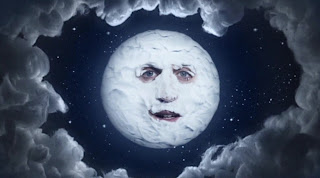
We also started on week one in the second half of the lecture with a very brief explanation of a possible history of animation. Spencer explained that animation history was a lot less clear cut than a graphic design one- as there are conflicting opinions on what was the 1st animation with "is there a narrative" being a key factor in to whether this can be considered an animation if it doesn't tell a clear story. An example of this is Emilie Cohl with Fantasmagorie in 1908. This is often considered the first animation as it displayed morphing and moving characters, but this is arguably not the case. The narrative is impossible to follow and feels disjointed, with it just appearing nonsense to the general viewing audience. 

We then viewed an animation by Tim Hope, this too expressed a strange, incohesive storyline. "The wolf man" was a simple series of cartoon drawings mapped out in 3d studios for a playstation animation. The animation element doesn't appear as basic as the overall output portrays- the sound effects and voice over lessen the quality of the piece I believe. The visuals are distracted from by the stage sound effects and immature songs within. 


However on further investigation of this piece, I uncovered that Tim Hope also did work for MightyBoosh. With this being a tv program I was familiar with it gave some clarity as to why bizarre outputs are often wanted. This Tv show is recognised and enjoyed for it's 'strange' factor- so visuals must also fit this requirement. 


An animation piece with a clearer narrative is "prometheus" By Bruce Brickton. This uses sculpture and morphology to create a clear narrative. It melds and molds the ever-changing scenes and story by the sculptures manipulation in to the next. 
Sculpture is a key source of character formation and movement in many more recognisable feature length animation films. 
e.g. Shrek, Toystory and Wallace and Gromit. It gives characters a 3d dimension even if they will be digitally manipulated to form the rest of the majority of the film.


With the example of Toystory, we were showed a piece of work Pixar had developed using zoetrope technology to form an animation. 
(Rotoscope- Max Fleischer 1915)
(zeotrope) 


While this appeared very visually fascinating and looked a clear animation on screen- we were told of all the post production treatment this would have had to go through in order for the edit to remove the flickering and strobe effect this type of animation type would produce.  This edit was essential before audience consumption. 

These above examples however prove how animation as an art form can now be linked and be considered a profitable enterprise. This has come a long way from the experimentational more basic animations such as Dip Dap (with stable objects and minor scene changes) and Stuart Blacktons laughing sketched characters. 


Tuesday, 27 September 2016

zine examples

Andy Rementer- "love and hats"


Alex Lucas- "RHSAL and backwards"


Barry McGee- "DFW year in review"


Piero Glina- "this is your god"


cybernetic self

Brief 1, 

Year 2 Studio Practice. 

This first project of the year is names "cybernetic self", and is a short 4 week project exploring yourself and others in a digital context. Focus is highlighted on the 'self portraiture' we have nowadays, and how this is influenced and moulded by technology, rather than the paint and canvas output typical portraits use. 

KeyIdeas;

Autopoeisis- comes from the words "self" (auto) and "creative production' (poiesis). It refers to a system capable of reproducing and maintaining itself.

The autopoeisis keywords to consider are;
  • emotions
  • thinking
  • intertwined 
  • rationality
  • human vs computer
  • "self making"
  • "self poetry"

Sociomaterial- is the way technology and sociology interact. How people's work/ activities are shaped by the technology surrounding them.

The sociomaterial keywords to consider are;
  • people
  • materials
  • equipment
  • components
  • extensions
  • yourself and more

Network Self- is the "self" you possess when using social networking sites or engaging online. This can be observed as different to someone "normal self".

The network self keywords to consider are;
  • self presentation
  • behavioural norms
  • patterns and routines
  • class/ gender/ race divides
  • privacy
  • activism
  • political impact
  • online tastes
  • social impact

These should be key themes to use in the research process, going on to development, the delivery of the idea and then the final outputs.

The example given as an introduction was Amalia Ulman's Excellence and Perfections art study.

These outputs were an elaborate project in which her social accounts slowly evolved in to only displaying the lifestyle of  'LA rich girl accounts'. She acted out each image as though it was a performance to appear like these girls, including wearing different clothes, dying her hair, posing unnaturally (for her normally) and pretending to go through cosmetic surgeries as if these are the only accepted images and lifestyle choices on social media. 


The above article describes her full transformation and how each of the 175 images led to the story development of being 'becoming' the 'IT girl'. Its questionable however if this was actually all faked, (as intended) or if Amalia could've actually become her label and lifestyle in a self fulfilling prophecy.  For example dying her hair for her imagery would also leave her with that hair colour in "real life", so phsyically there is no differentiation... could that indicate that there could also not be a mental detachment from the 'part'.